
Snowmobile Safety: Essential Safety Tips for Riders
Snowmobiling is a popular winter recreational activity across the United States, but it can pose serious risks to riders and passengers. High speeds, changing weather, unfamiliar terrain, thin ice, collisions, mechanical problems, and poor visibility can lead to accidents and injuries. Fortunately, basic safety practices can help riders reduce the risks of harm. Learn more about snowmobile safety, essential tips for riders, and how state regulations can vary.
Home | Snowmobile Safety Guide
- Wear a properly fitted helmet and appropriate protective gear every time you ride.
- Adjust your speed based on visibility, weather, trail conditions, and posted rules and signs.
- Never operate a snowmobile while intoxicated, and stay aware of changing conditions and hazards.
- Plan your route, tell someone where you are going, and carry essential emergency supplies.
- Before each ride, check your snowmobile, safety gear, and communication devices.
How To Stay Safe While Riding a Snowmobile
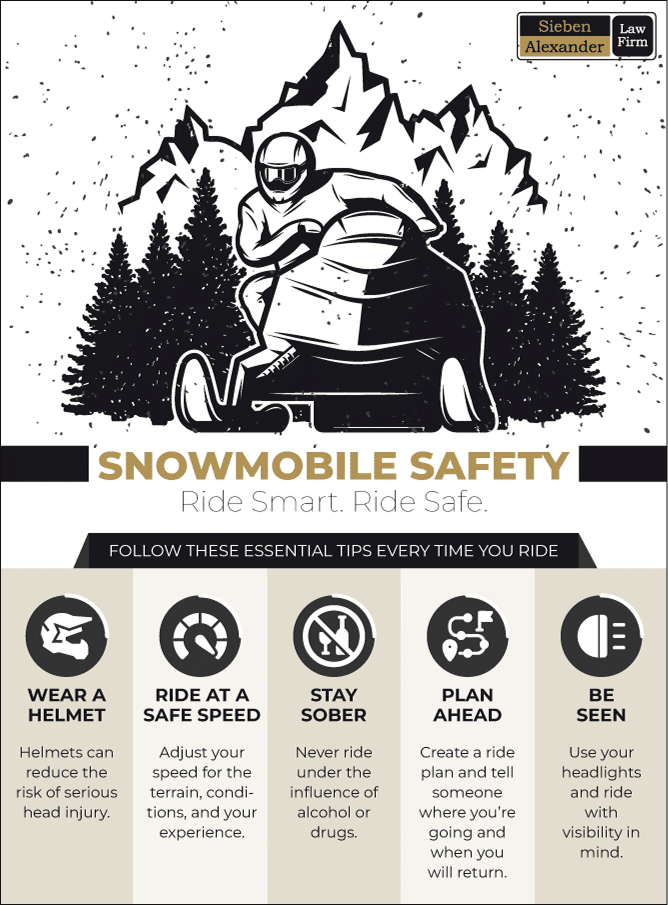
Staying safe while snowmobiling means taking precautions before and during every ride. Riders should wear a helmet, maintain a safe speed, never ride under the influence of alcohol or drugs, plan their route, let someone know their plans, and use proper lighting and visibility.
Wear a Proper Snowmobile Helmet and Protective Gear
Wearing the right protective gear can help reduce the risk of serious injuries and protect riders from cold, wind, snow, and debris. Protective gear you should consider includes:
- A properly fitted, approved snowmobile helmet
- Insulated, weather-appropriate clothing
- Protective goggles or a face shield to protect against wind, snow, and debris
- Insulated gloves designed for cold-weather riding
- Proper snowmobile boots with insulation, support, and adequate traction
- Layered clothing that can be added or removed as temperatures change
- Warm socks and moisture-wicking base layers to help keep feet and the body dry
- High-visibility or reflective clothing or gear, particularly when riding in low-light conditions
Snowmobile Speed and Safe Riding Practices
Excessive speed can make it harder for snowmobile operators to respond to changing terrain, obstacles, other riders, and unexpected hazards. Riders should choose a speed suited to their experience, visibility, weather, trail conditions, and surroundings. They should also obey posted speed limits, signs, and trail rules. Proper trail etiquette is also important for preventing collisions and keeping trails safe, such as understanding the following:
- Two-lane roads: Stay in your lane, keep your speed under control, and watch for oncoming and nearby vehicles.
- Intersections: Slow down, look in all directions, and yield when required by signs or local rules.
- Stopping: Use designated stopping areas when available, or move completely off the trail when it is safe and allowed.
- Blind areas: Avoid stopping in places where approaching riders cannot easily see you.
- Passing: Only pass when you have enough room and a clear view ahead. Signal your intentions when appropriate.
- Following distance: Leave enough space between you and the rider ahead so you have time to stop if they slow down or stop suddenly.
Never Operate a Snowmobile When Intoxicated
Alcohol and drugs can make it much harder to operate a snowmobile safely. They can slow reaction time, affect coordination and concentration, and make it harder to judge situations or make good decisions. This can be especially dangerous when trail or weather conditions change unexpectedly. Even if a rider feels okay to ride, impairment can increase the risk of losing control, hitting an obstacle or another rider, or making a dangerous decision.
Snowmobile Trail and Terrain Safety
Trail conditions can change quickly depending on the weather, snowpack, trail maintenance, and trail use. Before heading out, riders should know their route and the terrain they can expect. Stay on designated trails, pay attention to closures and posted restrictions, and be alert for groomers, maintenance equipment, and other trail users, including pedestrians, skiers, and snowshoers.
Snowmobile rules can also vary depending on where you are riding. Some public lands prohibit snowmobiles in certain areas, while others allow them only on specific trails or routes. Before your trip, check the federal, state, and local rules that apply to the area so you know where you can ride and what requirements you need to follow.
Snowmobile Ice Safety: Avoiding Dangerous Frozen Lakes and Rivers
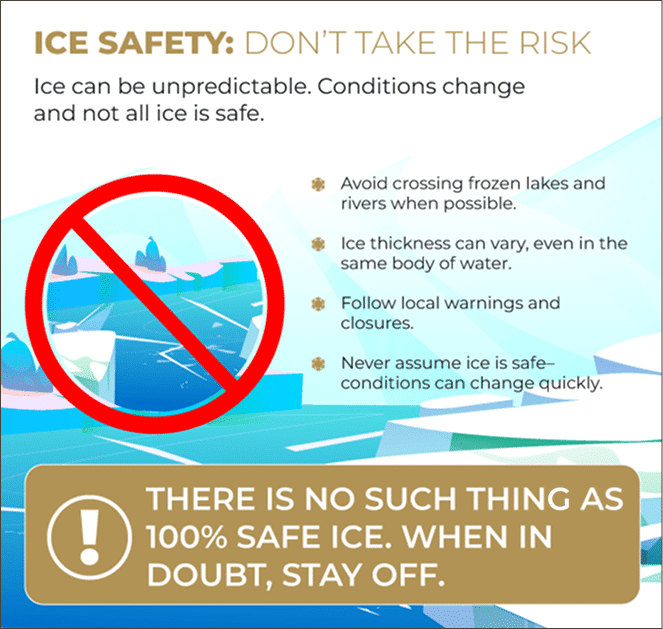
Traveling over frozen bodies of water can be dangerous, and the U.S. Forest Service strongly advises against it. Never assume ice is safe just because other people or vehicles have crossed it. Riders should heed local warnings and closures and remember that moving water, springs, currents, temperature changes, and other conditions can weaken ice and cause a breakthrough.
Snowmobile Safety at Night and in Poor Visibility
Visibility can change quickly during winter weather and nighttime riding, making it harder to see obstacles, trail intersections, other riders, and changes in terrain. Snowmobilers should use headlights and other required lighting, reduce their speed when visibility is limited, and remain especially alert for hazards that may be difficult to see until they are close.
Some of the most common hazards associated with poor visibility while snowmobiling include the following:
- Rollovers and falls
- Collisions with other riders or objects
- Open water and unsafe ice
- Unexpected, uneven terrain
- Missed markers and obstacles
- Getting lost
Snowmobile Maintenance and Equipment Checks
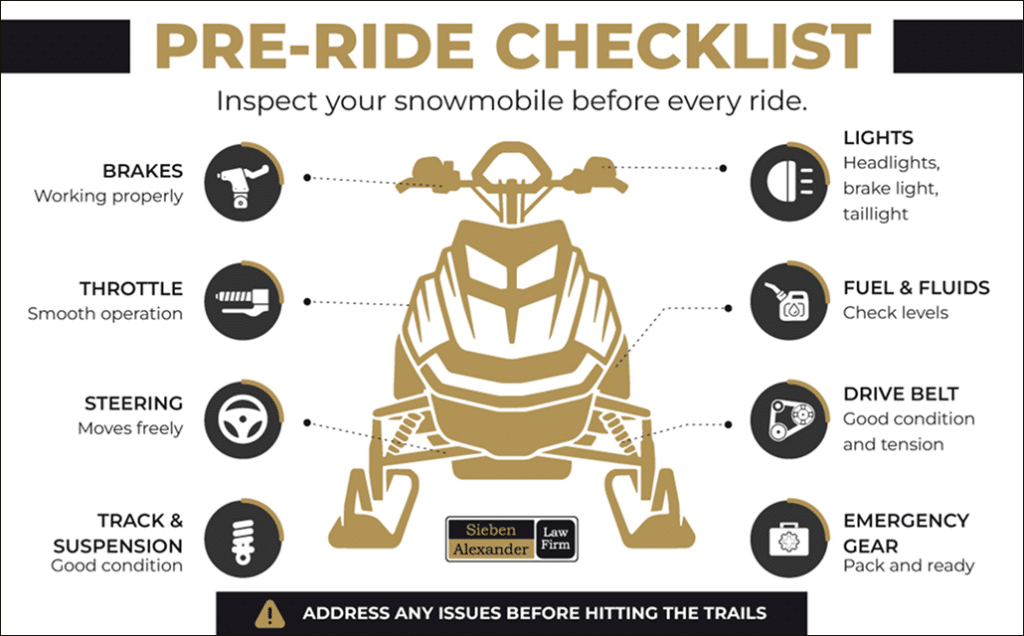
Riders should address any mechanical issues before heading into remote areas. A quick inspection of the snowmobile and its essential equipment can help catch problems early and reduce the risk of an accident or breakdown while out on the trail.
A pre-ride inspection should include checks on the following:
- Brakes and throttle
- Steering
- Lights
- Track and suspension
- Fuel and fluid levels
- Drive belt and other critical components
- Emergency equipment
- Communication devices
Create a Snowmobile Ride Plan and Carry Emergency Supplies
A ride plan can prevent emergencies and prepare riders if they occur. For example, before leaving, tell a trusted person where you are going, which trails you plan to use, and when you expect to return. However, snowmobilers should avoid riding alone whenever possible.
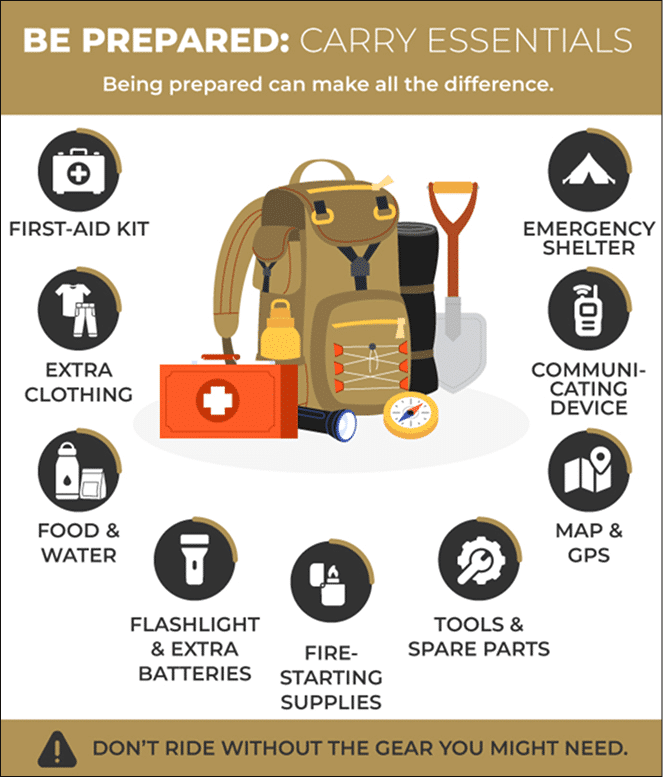
Preparation is especially important when riding in remote areas because emergency assistance could take longer to arrive. A snowmobile emergency kit can be life-saving. Consider bringing the following items with you:
- First-aid supplies
- Flashlight and extra batteries
- Extra clothing
- Food and water
- Emergency shelter
- Fire-starting supplies
- Basic repair tools
- Spare parts appropriate for the snowmobile
- Map or GPS device
- Fully charged communication device
Know Your State’s Snowmobile Laws and Regulations
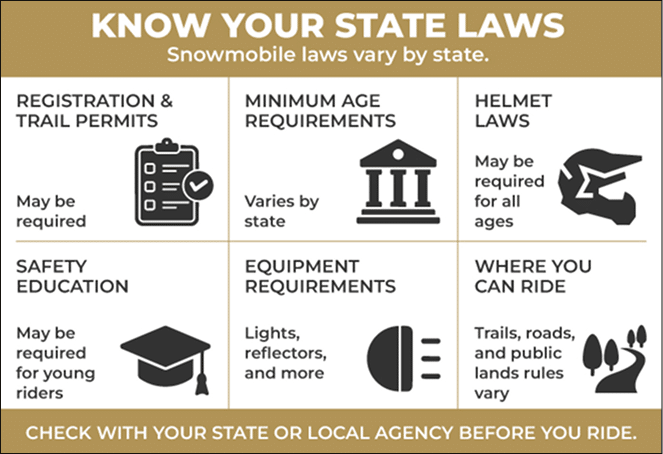
Snowmobile laws vary across the United States. Before riding, check the requirements set by the state agency that oversees snowmobile or off-highway vehicle regulations. If you plan to ride on federal land, review the rules for the specific national forest or other federal property as well.
Regulations can vary by state, including address registration, trail permits, minimum operator ages, safety education, helmet use, equipment, operating areas, speed limits, and whether snowmobiles may be operated on roads or public lands.
Snowmobile Safety Can Help Prevent Serious Injuries
Being prepared is one of the most important parts of staying safe on a snowmobile. Wear the right protective gear, keep your speed under control, avoid alcohol and drugs, and stay alert when visibility is poor. Following trail rules and checking your snowmobile before heading out can also help prevent accidents and mechanical problems.
Before you leave, take a few minutes to plan your route, check the weather and trail conditions, and make sure you have everything you need. Know the area’s rules and let someone know where you plan to ride. Taking these simple steps can help you avoid problems and stay safer while you’re out on the trail.
Sources and Snowmobile Safety Facts
- U.S.D.A. Forest Service: The U.S. Department of Agriculture Forest Service provides helpful information about winter sports and snowmobiling. Recommended safety practices include wearing a helmet and protective clothing, planning your trip ahead of time, carrying a way to communicate, checking your equipment, and avoiding riding alone or at night when possible.
- National Library of Medicine: The National Library of Medicine provides research on snowmobile-related injuries and discusses factors associated with injury risk, including speed, alcohol use, nighttime riding, and environmental conditions.
- State Resources for Snowmobiles: The Minnesota Department of Natural Resources, the Wisconsin Department of Natural Resources, and the North Dakota Parks and Recreation Department all provide state-specific resources for snowmobilers. From registration requirements to trail resources, check your state’s Natural Resource Department or Parks and Recreation division for local resources and guidelines.