
Disability in Minnesota: Statistics and Resources
In Minnesota, the disabled community is a testament to resilience and strength. Understanding disability statistics helps shape access to resources, policy decisions, and legal protections. This page will dive into these statistics, highlighting their importance and the impact they have on the community.

Home | Disability in Minnesota: Statistics and Resources
Navigate This Page
- Around 668,000 Minnesotans have at least one disability, slightly below the national average.
- The most prevalent are mobility, cognitive, hearing, and vision impairments, often linked to aging, chronic conditions, or injury.
- About 158,000 Minnesotans with disabilities are employed, with a 48% employment-to-population ratio—higher than the national average.
- Minnesotans can access SSDI, SSI, Minnesota Supplemental Aid, Medical Assistance, and Disability Determination Services for financial and health support.
- The ADA and Minnesota Human Rights Act prohibit discrimination and require reasonable accommodations in employment, education, housing, and public access.
How Common Are Disabilities in Minnesota?
The MN Compass states that approximately 668,000 Minnesotans, about 12% of the state population, report at least one disability. Minnesota is slightly below the United States’ national average, which is at 12.8%.
12.8%
of Minnesotans Report Having at Least One Disability
Most Common Disabilities in Minnesota
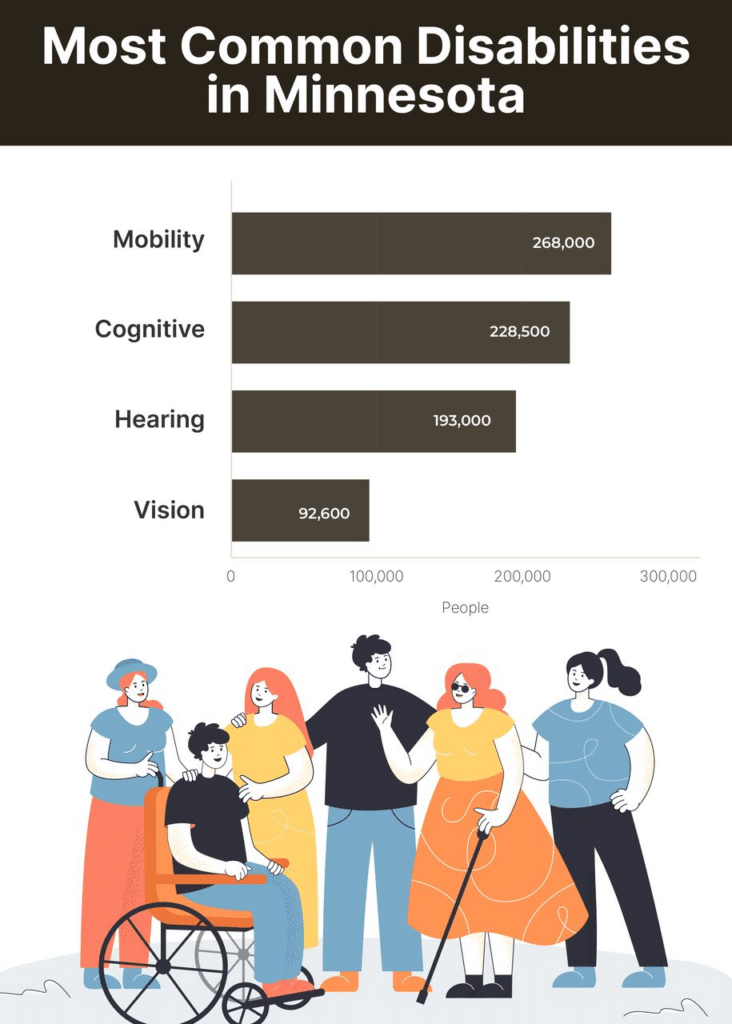
According to trends from Minnesota Go’s analysis, the most common disabilities in the state include the following:
- Mobility disabilities — 268,000 people
Many older Minnesotans, especially those 65 and older, struggle with mobility due to decreased lower-body strength.
- Cognitive disabilities — 228,500 people
Disabilities related to cognitive functioning may stem from a range of physical, mental, or emotional conditions, including stroke, dementia, traumatic brain injury, or learning disorders.
- Hearing disabilities — 193,000 people
Like mobility issues, hearing disabilities are often associated with the older population in Minnesota. Around 10% of Minnesotans, especially older adults and rural populations, experience at least mild hearing loss due to age-related hearing decline or occupational noise exposure.
- Vision disabilities — 92,600 people
Problems with sight usually manifest from conditions like macular degeneration, glaucoma, cataracts, or diabetic retinopathy. These are commonly age-related or chronic disease‑driven.
Employment of People With Disabilities in Minnesota
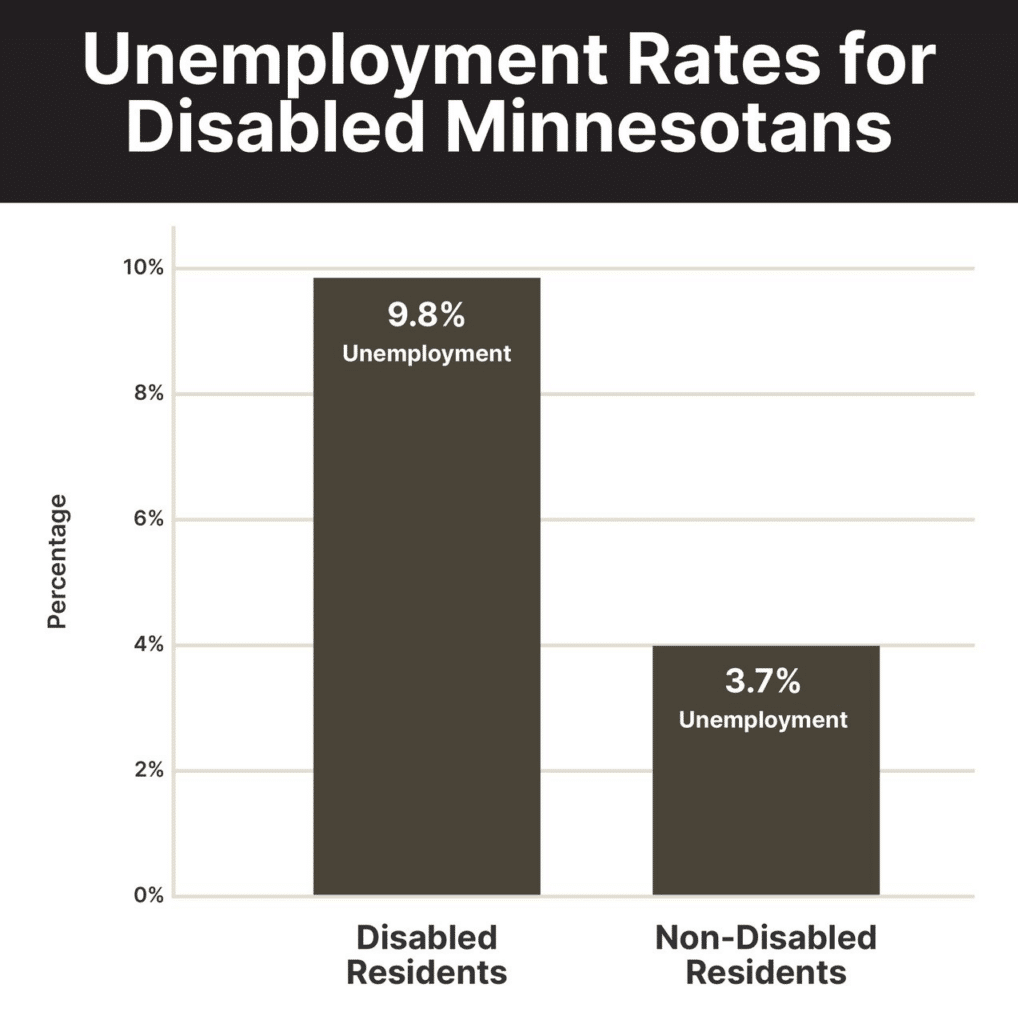
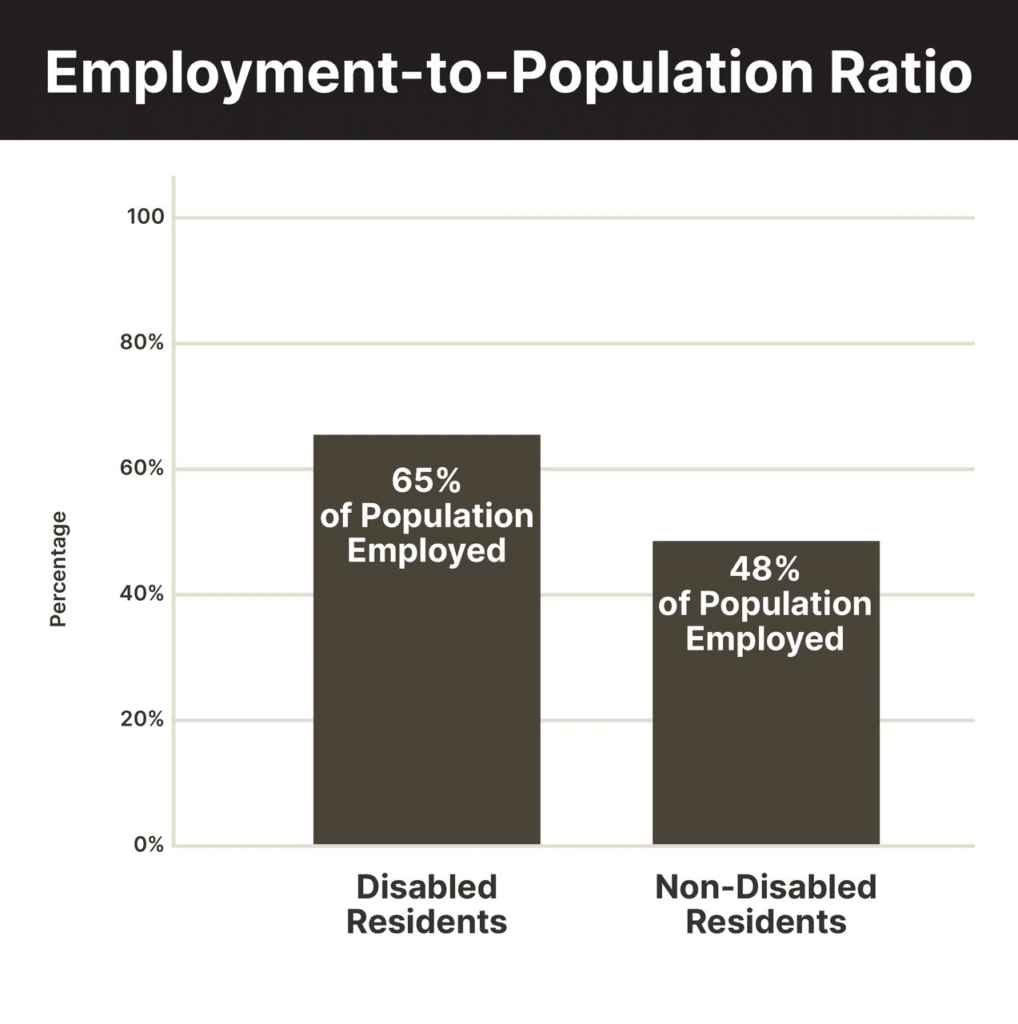
Of the individuals ages 16 and older in Minnesota with disabilities, approximately 158,000 are part of the civilian, noninstitutionalized labor force. The unemployment rate for those with disabilities in the state is 9.8%, compared to 3.7% for non-disabled residents. Overall, the employment-to-population ratio for Minnesotans with disabilities is 48%, significantly higher than the national average.
Several programs are in place to promote employment for Minnesotans with disabilities, including the 2014 Employment First policy. This policy emphasizes competitive, integrated employment—whether full-, part-, or self-employment at competitive wages—as the primary and anticipated outcome for working-age individuals with disabilities.
E1MN, a partnership across multiple state agencies, operationalizes the Employment First policy to support youth and adults with disabilities. It ensures better coordination of services—such as planning, training, and benefits counseling- and aims to increase the employment rate for people with disabilities in Minnesota.
Minnesota Disability Benefits and Resources
The United States offers federal programs to benefit individuals with disabilities across the country, such as:
- Social Security Disability Insurance, SSDI: A federal benefit for individuals who have worked, paid Social Security taxes, and now have a disabling condition that prevents substantial gainful activity.
- Supplemental Security Income, SSI: A needs-based program providing monthly cash support to low-income disabled individuals and seniors.
Additionally, Minnesota provides state-based programs for disabled residents, including the following:
- Minnesota Supplemental Aid, MSA: Provides a state cash supplement to SSI recipients who are older, have visual impairments, or have disabilities.
- Medical Assistance for Disabled Minnesotans, Medicaid: Delivers health coverage to individuals with disabilities who qualify for SSI, or through income eligibility.
- Disability Determination Services, DDS: A DEED-managed agency responsible for making medical eligibility determinations for SSDI and SSI applications in Minnesota.
Laws Protecting the Rights of Disabled Minnesotans
There are legal protections in place for people with disabilities under the Americans with Disabilities Act, also known as the ADA, and Minnesota-specific laws. The ADA was enacted in 1990 and amended in 2008. It prohibits discrimination and mandates equal access in employment, public services, and public accommodations.
For employers with 15 or more employees, the company must provide reasonable accommodations, such as modified work schedules and assistive technology. In addition, it forbids disability discrimination during hiring, promotion, or firing decisions.
The Minnesota Human Rights Act bans discrimination based on disability in several different areas, including employment, public services and accommodations, education, and housing. Minnesota’s accessibility laws require disability-friendly access and signage for public buildings and schools.

Minnesota Disability Frequently Asked Questions (FAQs)
What Percentage of Minnesotans Have a Disability?
According to the MN Compass, roughly 668,000 Minnesotans, about 12% of the state’s population, report having at least one disability.
How Many People With Disabilities Are Employed in Minnesota?
Around 158,000 disabled Minnesotans are part of the civilian, noninstitutionalized labor force, and the employment-to-population ratio for those with disabilities is 48%.