

- Talc-based baby powder can release asbestos fibers into the air and potentially cause mesothelioma decades after exposure.
- If baby powder caused your mesothelioma, you may have a claim against the product’s manufacturer.
- Products linked to asbestos-related cancer claims include Johnson & Johnson Baby Powder, Dr. Scholl’s, Gold Bond, and Vi-Jon powders sold under store brand labels such as Walmart’s Equate, Target’s Up & Up, and Walgreens.
- Sieben Alexander, P.A. can investigate your exposure history and help you determine if you have a talc asbestos case.
For many people diagnosed with mesothelioma, the source of asbestos exposure was an everyday product they believed was safe. Talc-based baby powder can become contaminated with asbestos, causing consumers to unknowingly inhale or ingest the microscopic fibers. If you or a loved one was diagnosed with mesothelioma, our talc asbestos exposure lawyers can help you understand whether asbestos in baby powder caused your cancer and seek compensation on your behalf.
How Asbestos-Contaminated Baby Powder Can Lead to Mesothelioma
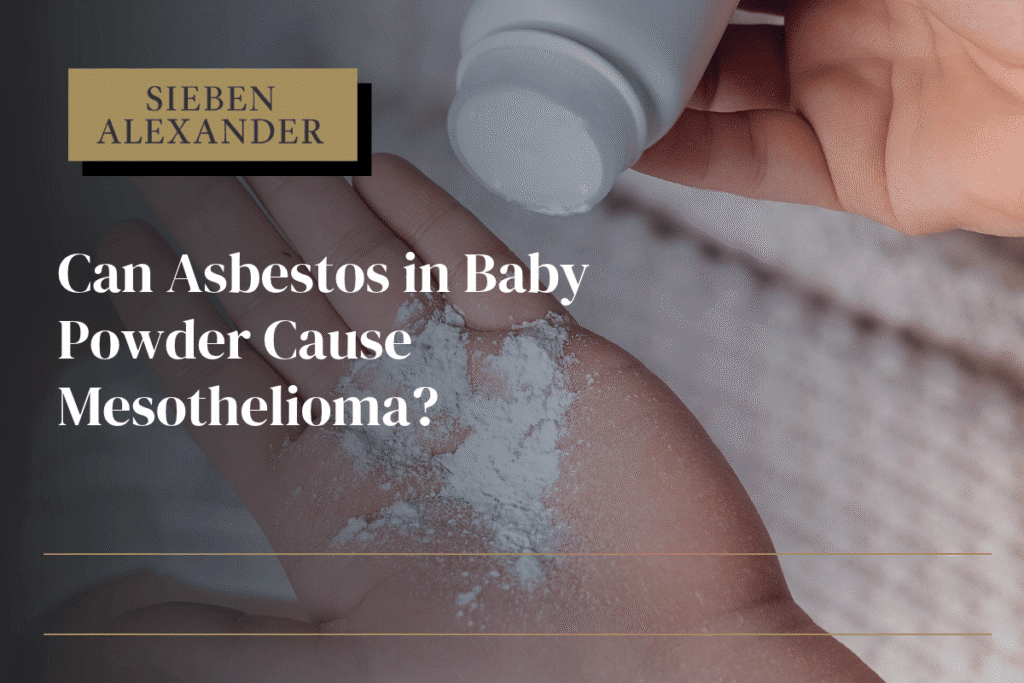
Talc and asbestos naturally occur near each other in the ground. Because of this, asbestos fibers can contaminate talc during mining. When a person uses a contaminated talc-based baby powder, asbestos fibers can enter the air. The consumer could then breathe in or swallow those fibers.
Once inside the body, asbestos fibers can reach the thin lining around the lungs or abdomen, called the mesothelium. They can remain there for years, causing persistent inflammation and cellular damage, which could eventually lead to mesothelioma.
This process happens slowly. Mesothelioma typically takes 20 to 50 years to develop after a person is first exposed to asbestos. Because of this long latency period, many people who file talcum powder asbestos cancer lawsuits have exposure histories dating back decades.
What Types of Mesothelioma Are Linked to Talc-Based Baby Powder?
Asbestos-contaminated baby powder has been linked to mesothelioma in two main areas of the body. Specific types connected to talc-asbestos exposure include:
- Pleural mesothelioma: This cancer affects the lining around the lungs. Symptoms often resemble other respiratory conditions and may include shortness of breath, chest pain, hoarseness, persistent cough, and difficulty swallowing.
- Peritoneal mesothelioma: This cancer affects the lining of the abdomen. Possible symptoms include belly pain, abdominal swelling, bowel obstruction, and nausea and vomiting.
Women make up a large share of mesothelioma patients whose only known history of asbestos exposure was from repeated use of talcum powder products. Many used these products as part of their daily routines for years without knowing about the connection between talc and asbestos.
What Other Cancers Can Be Caused by Asbestos-Contaminated Baby Powder?
Mesothelioma is one of several cancers that asbestos in baby powder can cause. Asbestos-contaminated talcum powder products may also be linked to an increased risk of ovarian cancer, lung cancer, and endometrial cancer.
Which Baby Powder Products Have Been Linked to Mesothelioma and Cancer?
Several popular talc-based baby powder and personal care products have been linked to asbestos-related cancers, including:
- Johnson & Johnson Baby Powder
- Dr. Scholl’s talc-based foot powders
- Gold Bond talc-based powders
- Store-brand baby powders manufactured by Vi-Jon LLC, sold under Walmart’s Equate, Target’s Up & Up, and Walgreens labels
Millions of people used these products over decades, and new mesothelioma cases continue to arise from this exposure. Depending on which companies supplied or manufactured the talc products you used, you may qualify for compensation through a mesothelioma lawsuit or an asbestos trust fund claim. Our firm helps families hold manufacturers accountable when their talc products cause harm, with results including a $65.5 million verdict for a young mother who developed mesothelioma after using Johnson & Johnson Baby Powder.
What to Do Next if You Suspect Baby Powder Caused Your Mesothelioma
Learning that a product you used for years may have caused your cancer can be difficult to process. Here’s where to go from here:
- Follow your provider’s treatment plan.
- Write down what you remember, including the brands you used, what years you used them, and how often you applied them.
- Preserve evidence, such as medical records, purchase receipts, product containers, and photographs that may help document your exposure.
- Speak with our mesothelioma attorneys to determine if you have the right to file a talcum powder asbestos lawsuit.
Get Help With Your Talc Mesothelioma Claim
If you suspect asbestos in baby powder caused your mesothelioma, you may be entitled to compensation for your medical expenses, lost income, and more. Our legal team at Sieben Alexander, P.A. is ready to help you understand your rights and options.
Our firm has advocated for victims of asbestos exposure throughout the Upper Midwest for over 50 years. In that time, our attorneys have recovered more than $900 million in settlements and verdicts for Minnesotans affected by mesothelioma and other asbestos-related diseases. Our results include some of the state’s largest recoveries for individuals harmed due to contaminated talc products.
Let us fight for the compensation and accountability you deserve while you focus on your health. Contact us online or call (651) 362-2108 for a free consultation. There are no upfront fees, and you pay nothing unless we recover compensation on your behalf.
Frequently Asked Questions
Here are our answers to questions we often hear about the connection between baby powder and mesothelioma.
Can Mesothelioma Develop From Occasional Baby Powder Use and Not Just Daily Use?
Yes. Although heavier exposure generally increases risk, mesothelioma can develop even if you used asbestos-contaminated baby powder occasionally.
Is Talc-Free Baby Powder Safe to Use?
Talc-free baby powders, such as those made with cornstarch, avoid the risk of asbestos contamination associated with talc. However, breathing in any loose powder can cause respiratory problems.
Can Men Develop Mesothelioma From Baby Powder Use?
Yes. While women have an increased risk of asbestos exposure in talc, men can develop mesothelioma after exposure to asbestos-contaminated baby powder. In one study of 75 mesothelioma patients whose only known asbestos exposure came from cosmetic talcum powder, 11 were men.
How Do I Know if the Baby Powder I Used Contained Asbestos?
Laboratory testing is required to determine whether a baby powder product contains asbestos. After our attorneys identify the products you used, we can review historical test results to assess whether you may have been exposed to asbestos.
Can I File a Talc Mesothelioma Claim if I Used Generic Store-Brand Powder, Not Johnson & Johnson?
Yes, you may have a claim if a store-brand talcum powder product caused your mesothelioma. Our attorneys have helped secure compensation for people diagnosed with mesothelioma after using store-brand products, including powders manufactured by Vi-Jon LLC and sold by Walmart, Target, and Walgreens.
Is There a Test to Confirm My Mesothelioma Was Caused by Talc Specifically?
While a mesothelioma diagnosis suggests that you were exposed to asbestos, no medical test can specifically prove that talc powder caused your illness. Our attorneys will consider your diagnosis, product use history, and other possible exposures to determine whether you have a talc-related claim.