
Mesothelioma Doctors and Treatment Centers in Minnesota and the Upper Midwest
When you are diagnosed with mesothelioma, where you receive care matters. According to the National Cancer Institute (NCI), about 3,000 new cases are diagnosed nationwide each year, and treating this rare cancer requires specialized knowledge and experience. Fortunately, patients in Minnesota and the surrounding states have access to several respected cancer programs close to home, including Mayo Clinic in Rochester, the University of Minnesota Masonic Cancer Center in Minneapolis, and Froedtert & the Medical College of Wisconsin in Milwaukee.
Home | Mesothelioma Doctors and Treatment Centers in Minnesota and the Upper Midwest
Navigate This Page
- Why Is Minnesota a Hub for Mesothelioma Care?
- Top Mesothelioma Treatment Centers in Minnesota
- Mesothelioma Treatment Centers Near Minnesota
- How to Choose a Mesothelioma Treatment Center
- What Treatments Are Available for Mesothelioma Patients?
- Finding the Right Mesothelioma Care Team in the Upper Midwest
- Frequently Asked Questions About Mesothelioma Doctors in Minnesota
- Minnesota is home to two NCI-designated Comprehensive Cancer Centers: Mayo Clinic in Rochester and the University of Minnesota Masonic Cancer Center in Minneapolis.
- Treatment may include surgery, chemotherapy, immunotherapy, or clinical trials based on the cancer’s location and stage and the patient’s overall health.
- Patients should look for direct mesothelioma experience, multidisciplinary treatment planning, specialized pathology, clinical trials, and support services when choosing a center.
Why Is Minnesota a Hub for Mesothelioma Care?
Minnesota is home to two National Cancer Institute-designated Comprehensive Cancer Centers: Mayo Clinic Comprehensive Cancer Center in Rochester and the University of Minnesota’s Masonic Cancer Center, which works with clinical partners including the M Health Fairview Masonic Cancer Clinic in Minneapolis. For people with mesothelioma in Minnesota and neighboring states, having this level of cancer care nearby opens the door to specialists who treat complex and uncommon cancers.
Depending on the type and stage of the disease, patients may benefit from:
- Multidisciplinary case review: Specialists from several fields jointly review the diagnosis and develop a coordinated treatment plan.
- Advanced surgical care: Options for qualifying patients include pleurectomy and decortication for pleural mesothelioma or cytoreductive surgery with HIPEC for peritoneal mesothelioma.
- Chemotherapy and immunotherapy: Experienced oncology teams can determine whether standard chemotherapy, immunotherapy, or a combination of treatments is appropriate for the diagnosis.
- Clinical trials: Research centers may offer studies of new or emerging therapies. Trial availability and eligibility change, so patients can search ClinicalTrials.gov or ask their care team about current options.
- Specialized diagnosis and pathology: Physicians familiar with mesothelioma can review biopsy samples, confirm the cancer type, and help reduce the risk of an incorrect or delayed diagnosis.
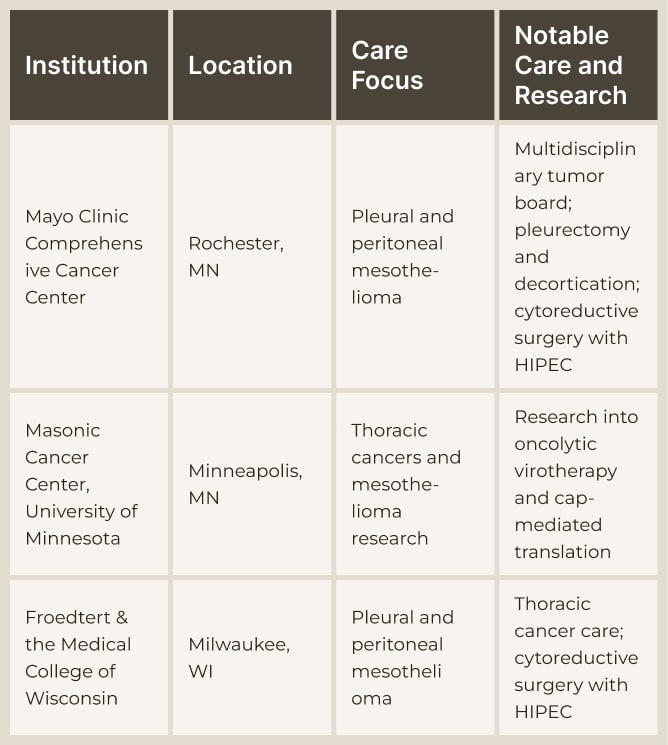
| Institution | Location | Care Focus | Notable Care and Research |
|---|---|---|---|
| Mayo Clinic Comprehensive Cancer Center | Rochester, MN | Pleural and peritoneal mesothelioma | Multidisciplinary tumor board; pleurectomy and decortication; cytoreductive surgery with HIPEC |
| Masonic Cancer Center, University of Minnesota | Minneapolis, MN | Thoracic cancers and mesothelioma research | Research into oncolytic virotherapy and cap-mediated translation |
| Froedtert & the Medical College of Wisconsin | Milwaukee, WI | Pleural and peritoneal mesothelioma | Thoracic cancer care; cytoreductive surgery with HIPEC |
Top Mesothelioma Treatment Centers in Minnesota
Minnesota patients have access to two major cancer centers without leaving the state. Both bring together physicians from multiple specialties, but their mesothelioma programs and areas of focus differ. The right center will depend on the type and stage of the disease, the treatments being considered, and the patient’s individual needs.
Mayo Clinic Comprehensive Cancer Center in Rochester, MN
Mayo Clinic has one of the country’s largest mesothelioma practices, evaluating between 100 and 150 people with a new diagnosis each year. Every patient is reviewed by its Mesothelioma Specialty Group, a multidisciplinary team experienced in both pleural and peritoneal mesothelioma.
That team includes specialists in:
- Medical oncology
- Thoracic surgery
- Pulmonary medicine
- Radiation oncology
- Radiology and pathology
- Palliative care
- Cancer research and clinical trials
Mayo offers chemotherapy, immunotherapy, radiation, targeted therapy, and several surgical approaches. For patients who qualify, their team may recommend a combination of treatments based on the location and extent of the cancer. The facility highlights:
- A dedicated tumor board that reviews each mesothelioma case
- Experience treating pleural and peritoneal mesothelioma
- Access to mesothelioma clinical trials
- Rochester-based physicians who diagnose and treat mesothelioma
University of Minnesota Masonic Cancer Center in Minneapolis, MN
The Masonic Cancer Center at the University of Minnesota is an NCI-designated Comprehensive Cancer Center focused on cancer research, education, and discovery. Patient care is delivered through M Health Fairview, where physicians apply that research in clinical settings and give qualifying patients access to early-phase trials and advanced therapies. The facility has specialists in:
- Medical oncology
- Thoracic oncology
- Thoracic surgery
- Radiation oncology
- Pathology
- Clinical research
University of Minnesota physicians include specialists whose clinical work covers mesothelioma, and its researchers have studied new approaches to treating the disease. Through M Health Fairview Cancer Care, patients also have access to multidisciplinary case review and support services during treatment. Some other highlights include:
- NCI Comprehensive Cancer Center designation
- University researchers with specific experience in mesothelioma
- Thoracic surgeons and oncologists who treat the disease
- Access to cancer clinical trials through the University of Minnesota
- Coordinated treatment through M Health Fairview facilities across the Twin Cities
Mesothelioma Treatment Centers Near Minnesota
Minnesota is a strong starting point for specialized mesothelioma care, but the right medical team may be outside the state. Cancer centers elsewhere in the Upper Midwest may offer another treatment option, a second opinion, or experience with a particular form of the disease.
Froedtert & the Medical College of Wisconsin Cancer Center in Milwaukee, WI
Froedtert Hospital and the Medical College of Wisconsin (MCW) treat both pleural and peritoneal mesothelioma. Its thoracic cancer team brings together medical oncologists, surgeons, radiation specialists, and other physicians experienced with rare cancers of the chest.
For patients with peritoneal mesothelioma, Froedtert & MCW’s Regional Cancer Therapy Program provides cytoreductive surgery with heated intraperitoneal chemotherapy, commonly called HIPEC. This treatment removes visible tumors before circulating heated chemotherapy through the abdomen. Some other highlights of the hospital include:
- Care for pleural and peritoneal mesothelioma
- Multidisciplinary treatment planning
- Chemotherapy, immunotherapy, surgery, and radiation
- HIPEC for qualifying peritoneal mesothelioma patients
- Second opinions and virtual visits for patients traveling from outside Milwaukee
One patient’s story also describes how the thoracic cancer team used combination immunotherapy after chemotherapy failed to control a patient’s pleural mesothelioma.

How to Choose a Mesothelioma Treatment Center
The closest or largest treatment center might not be the best for your situation. Look for a program with direct experience treating your type of mesothelioma and specialists who will examine the whole case before recommending care. It is also reasonable to seek a second opinion, especially before surgery or another major treatment decision.
Consider if a treatment center has:
- Mesothelioma experience: Physicians who regularly diagnose and treat this rare cancer
- Specialized pathology: Pathologists who can confirm the diagnosis, cell type, and stage
- The right surgical expertise: Thoracic surgeons for pleural mesothelioma or surgeons experienced in treating peritoneal disease
- Medical and radiation oncology: Specialists who understand how chemotherapy, immunotherapy, and radiation fit into mesothelioma care
- Multidisciplinary planning: A team that reviews the case together instead of treating each part of the disease separately
- Clinical trials: Access to studies testing new treatment approaches
- Supportive care: Helps manage pain, breathing problems, nutrition, and treatment side effects
- Practical support: Assistance with insurance, travel, lodging, and coordinating care closer to home
What Treatments Are Available for Mesothelioma Patients?
There is no routine treatment plan for mesothelioma. Doctors must first understand where the cancer began and how far it has spread. The patient’s overall health also shapes what comes next. With those answers, a mesothelioma specialist can recommend the treatment or combination of treatments that may be beneficial.
- Surgery: Surgeons may remove as much visible cancer as possible when the disease is operable and the patient is healthy enough for the procedure.
- Chemotherapy: Chemotherapy drugs travel through the body to destroy cancer cells or slow their growth and may be given before or after surgery.
- Immunotherapy: Immunotherapy helps the immune system recognize and attack cancer cells and is an option for some patients with mesothelioma that cannot be removed surgically.
- Clinical trials: Clinical trials give qualifying patients access to treatments or new combinations of existing therapies that researchers are still evaluating.
Finding the Right Mesothelioma Care Team in the Upper Midwest
Choosing where to receive mesothelioma care is one of the first major decisions patients and their families face after a diagnosis. Experience matters. This rare cancer calls for specialists who understand asbestos-related disease and know how to weigh surgery, systemic therapies, clinical trials, and symptom management together.
Patients across Minnesota and the Upper Midwest have access to nationally recognized cancer programs with that level of knowledge close to home. The right team will listen, explain the options plainly, and build treatment around the person rather than the diagnosis alone. Mesothelioma is a serious disease, but finding physicians you trust can bring greater confidence to each decision ahead.
Frequently Asked Questions About Mesothelioma Doctors in MinnesotaAbout Attorney Referrals
Why Is Mayo Clinic in Rochester Considered a Leader in Mesothelioma Care?
Mayo Clinic has one of the country’s largest mesothelioma practices, evaluating 100 to 150 newly diagnosed patients each year. Its Mesothelioma Specialty Group brings physicians from multiple specialties together to review each case.
Should I See a Mesothelioma Specialist?
Yes. A physician with direct mesothelioma experience can confirm the diagnosis and explain which treatments are realistic for your case. Mesothelioma is rare and difficult to diagnose, and its treatment differs from that of more common cancers.
Can I Get a Second Opinion After a Mesothelioma Diagnosis?
Yes. Seeking another opinion is especially worthwhile before surgery or another major treatment decision. A second specialist can review your pathology report, scans, and proposed treatment plan.
Does Minnesota Have Mesothelioma Clinical Trials?
Yes, although available studies and eligibility requirements change. Mayo Clinic and University of Minnesota researchers conduct cancer studies, and patients can search current mesothelioma trials through ClinicalTrials.gov or ask their treatment team about open studies.
Can Out-of-State Patients Seek Medical Care in Minnesota?
Minnesota cancer centers accept patients from other states for treatment and second opinions. Before scheduling, check whether the center requires a referral and confirm coverage with your health insurer, as network rules and travel benefits vary by plan.